
How to Adapt Meta Ads for Retail Policies
Learn how to navigate Meta's retail advertising policies to ensure compliance and optimize your ad performance effectively.
Meta ads must follow strict retail policies. Ignoring these guidelines can lead to rejected ads, account restrictions, or wasted ad spend. Meta’s policies cover product accuracy, landing page compliance, targeting rules, and ad creatives. Violations can result in reduced ad delivery, higher costs, or even account bans.
Key takeaways for compliance:
Product Accuracy: Avoid misleading claims in ad copy.
Landing Pages: Ensure they load quickly, match ad content, and show clear pricing.
Targeting Rules: Avoid discriminatory practices and use ethical audience targeting.
Ad Creatives: Use honest visuals and minimal text overlays.
How to stay compliant:
Regularly audit campaigns using Meta Ads Manager.
Leverage tools like AdAmigo.ai for automated compliance checks and updates.
Monitor Meta’s policy updates to avoid surprises.
Why it matters: Policy violations can disrupt campaigns, especially during peak shopping periods. Staying compliant ensures better ad performance and protects your account health.
Facebook advertising policy simplified | Facebook Ads Policy
Understanding the Meta ad review process is essential for ensuring your retail campaigns go live without delays.
Meta's Retail Advertising Policies Explained
To create successful ad campaigns on Meta platforms like Facebook, Instagram, Messenger, and the Meta Audience Network, it's essential to understand their retail advertising policies. These policies set the standards for promoting products while safeguarding users and fostering connections between businesses and their customers.
Main Policy Requirements for Retail Ads
Product Accuracy and Transparency
Your ads must honestly represent the products being sold. Avoid overstating features or making misleading claims to ensure customers receive exactly what they expect.
Landing Page Compliance
Landing pages should load quickly, clearly display product pricing, and include key business details to maintain transparency.
Prohibited Content Categories
Certain products may be restricted or require special approval. Always check Meta's content guidelines to verify if your products are eligible for advertising using a Meta ad policy checker.
Targeting Limitations
Ad targeting must be inclusive. Avoid discriminatory practices, especially regarding sensitive characteristics.
Creative Standards
Your ad creatives must meet technical requirements and avoid misleading content. This ensures clarity and compliance across all campaigns.
How Meta Reviews and Approves Ads
Meta uses automated systems to examine ad copy, visuals, and landing pages for any policy violations. If an issue arises - especially with sensitive content or accounts that have had prior violations - a manual review may be initiated. This process typically takes 24 to 48 hours. Advertisers with a positive compliance history often experience quicker approvals.
Understanding the potential consequences of breaking these rules is just as important.
What Happens When You Break the Rules
Ad Rejections
If your ad violates Meta's policies, it will be rejected. You’ll receive a notification explaining the specific issue.
Account-Level Consequences
Repeated or severe violations can result in restrictions or even suspension of your ad account, business assets, Facebook Page, or personal account. If this happens, you may need to appeal a disabled Meta ad account. In extreme cases, these penalties may permanently block your ability to advertise on Meta platforms.
Performance Impact
Even if your ad isn’t outright rejected, failing to fully comply with Meta’s guidelines can lead to reduced ad delivery and higher costs per click, which will hurt your campaign’s performance.
The severity of these consequences depends on how frequently and seriously the rules are broken, ranging from simple ad rejections to full account suspensions.
Step-by-Step Guide to Creating Compliant Meta Ads
Carefully review and adjust all campaigns to align with Meta's policies while maintaining their effectiveness.
How to Check Existing Campaigns for Policy Issues
Start by auditing your campaigns in Meta Ads Manager. Look for warning icons or rejection notices in the "Campaigns" tab, as these highlight potential policy violations.
Make sure your ad copy is accurate and avoids exaggerated claims (e.g., steer clear of phrases like "miracle results"). Verify that landing pages reflect the ad's pricing and any additional fees.
Check your creative assets for compliance with Meta's image-to-text ratio guidelines. Avoid excessive text overlays and ensure product photos accurately depict the actual items being sold - not generic stock images. For video ads, show products in realistic, everyday scenarios and include captions for clarity and accessibility.
Review targeting settings to ensure no groups are unfairly excluded based on age, gender, or location. Double-check that custom audiences are built using data collected with proper consent.
Finally, test all ad links to confirm they load quickly and clearly display product details and pricing. Use these findings to fine-tune your ad copy and improve creative elements.
Writing Ad Copy and Designing Creatives That Follow Rules
Focus on creating honest and straightforward ad copy. Replace exaggerated claims like "the world's best running shoes" with more factual descriptions, such as "lightweight running shoes with cushioned soles and breathable mesh."
Price transparency is critical. Clearly state the total cost, including any additional charges for shipping or subscriptions. For example, phrases like "starting at $29" can effectively communicate pricing for products with multiple variants.
Maintain visual consistency between your ad creatives and landing pages. For instance, if your ad features a red dress, ensure the same item is shown on the landing page. Use high-quality product images that accurately represent colors, sizes, and features, avoiding heavy filters or manipulations.
Keep text overlays minimal, highlighting only key details like discounts or essential features. In video ads, showcase the product in natural, relatable scenarios rather than using exaggerated or unrealistic demonstrations.
Once your ad copy and creatives are polished, take advantage of Meta's built-in compliance tools to simplify the process.
Using Meta's Built-in Compliance Tools
Meta offers several tools to help ensure your ads meet their guidelines. The Account Quality section in Business Manager provides a clear overview of your account's policy status, flagging any restrictions or warnings that need attention.
Creative Hub allows you to preview ads across placements, helping you identify potential issues like improper text-to-image ratios or formatting errors before publishing.
Meta’s Policy Center is another valuable resource. It outlines current advertising standards and includes examples of compliant and non-compliant content. Regularly reviewing this resource is essential, as Meta's policies can change over time.
You can also use automated tools like the Text Overlay Tool to check for compliance issues and set up Ads Manager rules to pause any non-compliant ads automatically.
For an added layer of efficiency, platforms like AdAmigo.ai can automate compliance monitoring while optimizing your targeting, creatives, and copy. This frees you up to focus on growing your campaigns while staying within Meta's guidelines.
Setting Up Targeting That Follows Meta's Rules
Meta has clear guidelines to ensure advertising practices are fair and protect user privacy. Advertisers must avoid making assumptions about personal characteristics and instead use inclusive, ethical targeting methods. Below, we’ll cover effective ways to stay compliant while expanding your retail campaign’s reach.
Allowed Targeting Methods for Retail Campaigns
Custom Audiences
Leverage custom audiences made from consented customer data like emails, phone numbers, or website visits. This method works well for targeting those who’ve recently purchased or shown interest in your products.
Lookalike Audiences
With lookalike audiences, you can reach users similar to your best customers. Meta’s algorithm identifies these users without relying on demographic assumptions, keeping your campaign compliant.
Interest-Based Targeting
Focus on users’ interests related to your products rather than factors like age or gender. For example, target people who follow fitness pages if you’re selling workout gear.
Special Ad Audiences
For campaigns involving credit, housing, or employment offers, use Special Ad Audiences. These require you to declare the campaign type during setup, activating Meta’s safeguards against discriminatory targeting.
"Advertisers must not use targeting to discriminate, harass, or engage in predatory practices." – Meta Advertising Policies
How to Segment Retail Audiences Properly
Segmenting your audience thoughtfully can improve campaign performance while staying within Meta’s rules. Focus on behavioral clustering and interactions rather than personal attributes.
Purchase Behavior: Separate campaigns for first-time buyers, loyal customers, or high-value shoppers. Tailor your messaging to match their buying patterns.
Geographic Segmentation: If you have physical stores or regional delivery areas, target users near those locations to drive foot traffic or local sales.
Device and Platform Targeting: Adjust your content for mobile or desktop users. For instance, mobile ads might feature vertical videos designed for smaller screens.
Engagement-Based Segmentation: Target users based on their interactions with your brand, such as liking a post or visiting a specific product page. This ensures your ads are relevant without crossing into sensitive territory.
Always avoid segmenting based on sensitive categories like health, financial status, or personal hardships. Violating these policies could result in account restrictions.
Creating Ads That Meet Inclusivity Standards
Your ad creatives should resonate with a broad audience. Use language and visuals that include everyone - replace phrases like "perfect for busy moms" with "perfect for busy parents." Show diversity in your imagery and follow accessibility guidelines, such as adding captions, using high-contrast text, and ensuring your landing pages are screen reader–friendly.
Avoid overly specific targeting that might exclude protected groups. Instead, let Meta’s optimization tools deliver your ads broadly while relying on performance data to refine your strategy.
AI tools like AdAmigo.ai can help you maintain compliance by adjusting targeting strategies automatically and keeping you informed about policy updates. These tools can be a valuable resource for staying aligned with Meta’s evolving standards.
Using AI Tools for Compliance and Better Performance
Keeping up with Meta's ever-changing ad policies is no small feat, especially when managing large-scale campaigns. Manual compliance checks can quickly become overwhelming, which is why automated AI solutions have become a natural next step.
How AI Handles Policy Compliance Automatically
AI-powered tools are designed to simplify the complex world of ad compliance. Using machine learning, these platforms continuously analyze policy updates and ensure that ad creatives, copy, and targeting settings meet the latest requirements. They also monitor for potential violations in real time, flagging or adjusting ads before they go live.
For instance, if an ad contains restricted language or targets a sensitive audience, the AI system will detect the issue by scanning the creative and targeting parameters. It might automatically make the necessary edits or flag the ad for review, often suggesting compliant alternatives that align with Meta's inclusivity and transparency standards. This real-time oversight is especially helpful since Meta can revisit and re-review previously approved ads at any time. Plus, these systems quickly adapt to policy changes, ensuring they stay current.
This level of automation and adaptability paves the way for advanced platforms like AdAmigo.ai to not only ensure compliance but also boost ad performance.
AdAmigo.ai Features for Retail Advertisers
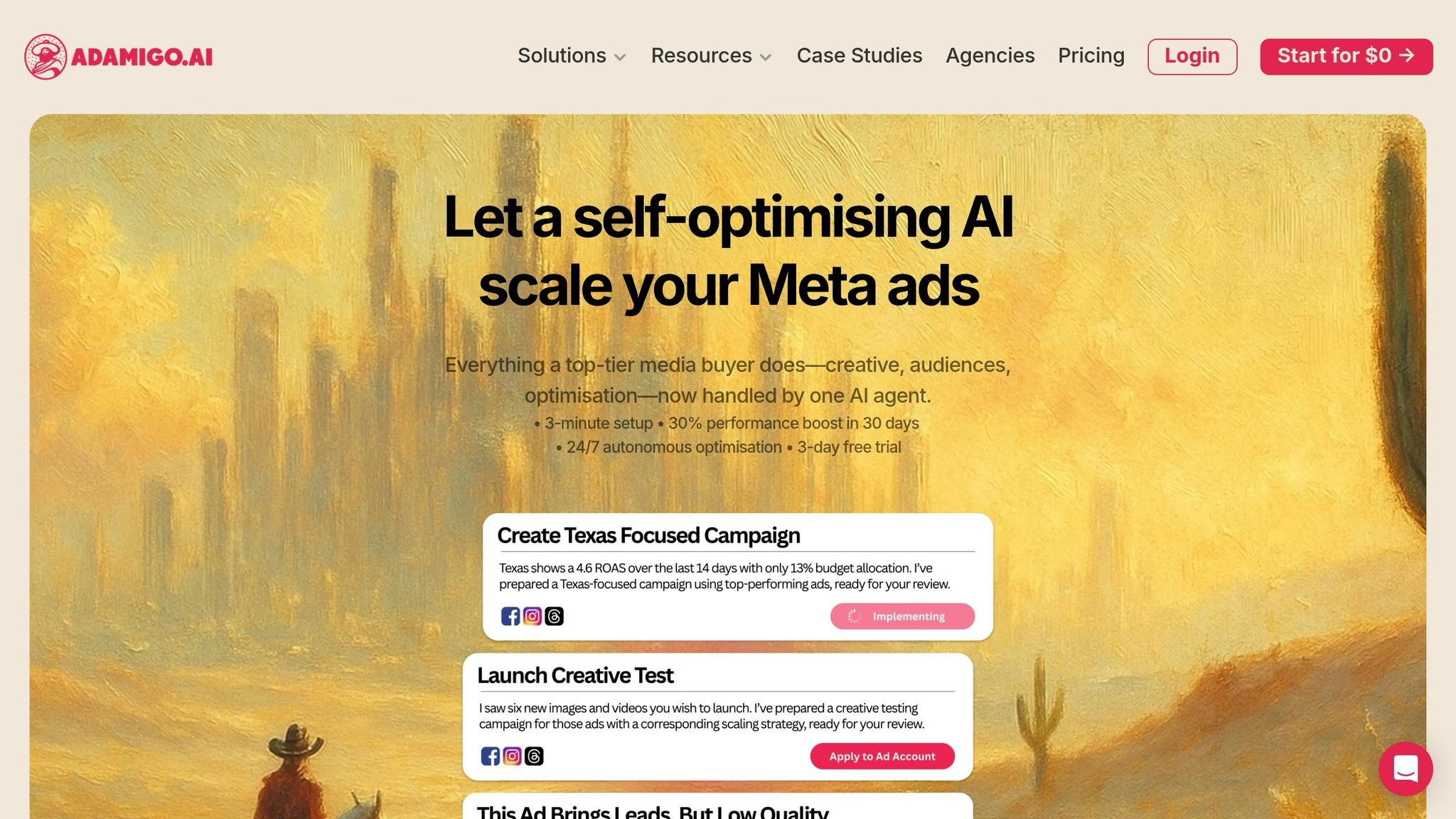
AdAmigo.ai takes automated compliance to the next level, offering tools specifically designed for retail advertisers. It’s not just about following rules - it’s about optimizing campaigns based on real-world results, not static guidelines.
AI Ads Agent: This feature learns your brand’s identity, monitors competitors, and analyzes top-performing ads. It then generates and launches compliant creatives with a single click, maintaining your brand’s voice while adhering to current policies.
AI Actions: Provides a daily list of suggested tweaks for creatives, audiences, budgets, and bids. Each recommendation is explained in straightforward terms, making it easier to understand and implement changes for both compliance and better performance.
Bulk Ad Launch: Allows you to create and deploy multiple Meta ads simultaneously, with each ad automatically checked for compliance. This is perfect for seasonal campaigns or testing various product variations quickly.
AI Chat Agent: Offers instant answers to compliance questions and lets you manage ads directly through chat. Whether you need to launch ads or analyze performance, this tool delivers actionable insights on demand.
These features simplify compliance and campaign management, reducing the risk of ad rejections. You can decide whether to approve changes manually or let the system handle everything autonomously.
Manual Management vs AI-Driven Optimization
When comparing manual ad management to AI-driven solutions like AdAmigo.ai, the advantages of automation become clear. Here’s a quick breakdown:
Aspect | Manual Management | AI-Driven (AdAmigo.ai) |
|---|---|---|
Efficiency | Time-intensive, labor-heavy | Fast, automated, 24/7 monitoring |
Accuracy | Prone to errors | Consistent, data-driven |
Scalability | Limited by team capacity | Handles hundreds of ads at once |
Policy Adaptation | Requires constant retraining | Updates automatically |
Insights | Basic and reactive | Real-time, actionable, predictive |
Creative Optimization | Manual A/B testing | Continuous, automated improvement |
AI solutions also offer cost advantages. Agencies, for example, can manage 4–8× more clients when AI handles execution, freeing senior staff to focus on strategy. For in-house teams, AI can replace or complement expensive hires, providing a system that continuously improves its expertise.
The results speak for themselves. AdAmigo.ai users often see significant performance gains, with some reporting up to a 30% improvement in the first month and as much as an 83% increase in ROAS. By eliminating manual tasks like rule-building and ad uploads, the platform also saves hours of work each week.
That said, human oversight is still essential. While AI tools are highly effective, they may occasionally misinterpret nuanced policies or brand-specific guidelines. Combining AI’s efficiency with human judgment - especially for sensitive or high-stakes campaigns - ensures both compliance and brand safety. AdAmigo.ai supports this balance by offering options for fully autonomous operations or manual approval workflows, giving you the flexibility to choose the level of control that works best for your campaigns.
Staying Compliant as Policies Change
Meta's advertising policies are constantly evolving, which means staying compliant requires a proactive approach. Pairing this mindset with tools like AdAmigo.ai, which automatically monitors and adjusts for policy updates, can help you stay ahead of the curve.
Creating a Schedule for Policy Updates and Reviews
To keep up with policy changes, subscribe to Meta for Business updates for the latest news, events, and product announcements. Set calendar reminders to regularly check the Meta Transparency Center and Advertising Standards pages for any modifications. Taking time to review your active ads against these guidelines ensures your campaigns stay compliant as policies shift.
Using Data to Spot Compliance Problems
Keep a close eye on your campaign performance metrics to catch potential compliance issues early. Sudden drops in ad delivery, a rising number of rejections, or unexpected cost increases could all signal policy-related problems. Use Meta Ads Manager to set up automated alerts that notify you if your ads are disapproved or if your account quality score starts to decline.
Make it a habit to check your account quality score through the Account Quality section in Business Manager. A drop in this score often points to policy violations that need immediate attention. By analyzing patterns in rejected ads, you can adjust your creative process to prevent recurring issues.
Testing and Improving Ad Creatives Regularly
Refresh your ad creatives and copy every few weeks to stay aligned with Meta’s evolving policies and avoid ad fatigue. Before launching major campaigns, review the Ad Standards and Policy Hub to ensure your strategies meet current guidelines.
Conclusion: Main Points for Meta Ads Retail Policy Compliance
To succeed with Meta ads in retail, it’s all about knowing the rules, staying quick on your feet, and planning ahead for changes. Meta’s automated systems have become stricter than ever, and keeping your ads compliant isn’t just a good idea - it’s a must to avoid bans and costly disruptions.
The first and most important step? Audit your campaigns before launch. Make sure your ad copy aligns with landing pages, your targeting is inclusive, and sensitive product categories are properly disclosed. While manual auditing is key, AI tools can make this process faster and more efficient.
AI tools like AdAmigo.ai are game-changers for ad compliance and performance. These platforms take the heavy lifting out of manually checking every ad against Meta’s evolving rules. They automatically optimize targeting within policy limits and adjust to changes in real time. For agencies, this means one media buyer can handle 4–8× more clients, focusing on strategy while AI handles execution.
Automation slashes compliance time from hours to minutes and improves performance in the process. Faster testing of ad variations and scaling successful campaigns becomes possible without constantly worrying about policy violations.
But don’t stop at auditing and automation - ongoing monitoring is critical. Meta’s policies are always evolving, so set up automated alerts for account quality changes, stay updated on policy revisions, and regularly review active campaigns. Combining proactive monitoring with AI-driven compliance ensures your advertising efforts are protected and optimized for success.
Here’s why it’s worth the effort: 23% of marketers say Facebook delivers the best ROI among social platforms. By blending manual processes with automation, you’ll not only stay compliant but also tap into Meta’s massive audience, building campaigns that convert effectively while staying within the rules.
FAQs
How can AI tools like AdAmigo.ai help retail businesses improve Meta ad performance while staying compliant with policies?
AI tools like AdAmigo.ai make managing Meta ad campaigns easier and more efficient for retail businesses. They handle essential tasks like designing ad creatives, targeting the right audience, and optimizing budgets - all while ensuring compliance with Meta’s advertising policies.
What sets AdAmigo.ai apart is its ability to adapt using real-time data. It fine-tunes campaigns on the fly, helping boost relevance and return on investment (ROI) with minimal manual input. This means fewer policy issues and more time for you to focus on the bigger picture, while the AI takes care of the day-to-day execution effortlessly.
What happens if I don’t follow Meta’s retail advertising policies, and how could it impact my ad account?
Not adhering to Meta's retail advertising policies can lead to ad rejections, account restrictions, or even suspensions. These setbacks can seriously disrupt your campaigns and limit your brand's reach. If violations continue, you risk losing access to crucial ad tools and payment features, making it challenging to run effective ads.
To steer clear of these problems, make sure your campaigns fully comply with Meta's guidelines. Take the time to regularly review your ad content and settings to ensure they align with the platform's rules. This way, you can keep your account in good standing and your ads running without interruptions.
How can I make sure my retail ads comply with Meta's advertising policies?
To make sure your retail ads meet Meta's advertising policies, start by leveraging Meta's Ads Manager tools. These tools can help you verify if your ads align with the platform's guidelines before submission. It's also a good idea to regularly check Meta's Advertising Standards to stay informed about restricted content, such as misleading claims, discriminatory language, or inappropriate material.
For extra peace of mind, try using the Creative Hub to preview and test your ads before they go live. This step can help catch potential issues early, reducing the risk of rejection. Staying ahead of compliance requirements can save you time and keep your campaigns running without unnecessary interruptions.